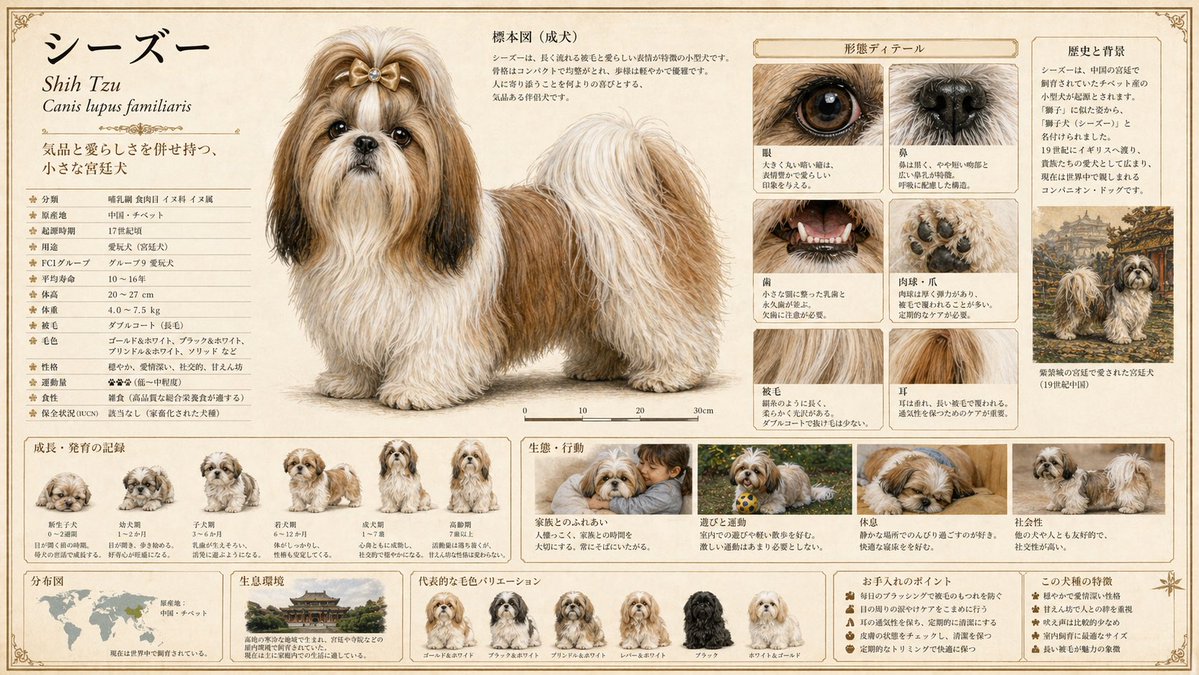
Detailed Animal Encyclopedia Generation
A sophisticated prompt for creating high-quality animal encyclopedia pages with anatomical details, habitat information, and evolutionary stages.
This is a gpt-image-2 prompt case for 插画艺术. Use the copy-ready prompt below to generate similar visuals, and review YouMind OpenLab awesome-gpt-image-2 attribution plus commercial-use rights before reuse.
Prompt
Copy-ready prompt
[Animal Name]{argument name="animal name" default="Enter animal name here"} [Objective] To create a large-format, publication-quality encyclopedia illustration, presented as a single image. Generate a publication-grade illustration that combines scientific accuracy with visual appeal. [Output Format] - Contain all information in a single image - Aspect Ratio: 16:9 - Quality: High (crucial for ensuring the accuracy of small text, thin lines, and labels) [Screen Design Principles] Layout, partitioning, information prioritization, margin design, typography, decorative elements, and color scheme should be determined autonomously by GPT based on the animal's characteristics, habitat, and classification. Design the most suitable layout for the specific animal, without being limited by templates. [Essential Elements] Integrate the following elements naturally into a single image: 1. Master Specimen Illustration - Full adult depiction with the highest precision - Scientifically accurate colors, patterns, and proportions - Scientific name (italic), common name, and classification information (order, family, genus) - Scale bar or size comparison 2. Growth/Development Record - Step-by-step illustrations of changes from juvenile to adult - Concise labels for each stage 3. Ecological/Behavioral Description - Scenes of action in the natural environment (foraging, predation, reproduction, territorial behavior, etc.) - Habitat vegetation and topography included in the background 4. Morphological Details - Close-ups of characteristic features (claws, teeth, feathers, scales, eyes, etc.) - Enlarged depiction of surface textures 5. Distribution/Habitat Range - World or regional distribution map - Habitat type description 6. Data Labeling - Body length, weight, lifespan, diet, conservation status (IUCN, etc.) - Easy-to-read tables or charts [Style Guidelines] - Publication-quality natural history encyclopedia style - Realistic botanical/naturalist painting style (19 (Precision of a 20th-century naturalist + Modern color expression) - Paper texture: Cream-colored hot-pressed watercolor paper or parchment-style - Typography: Uniform serif font. Scientific names use italics; data can use mixed small sans-serif fonts - Borders: Thin ink borders + classic graphic decorations - Overall color scheme, layout tone, and page design optimized by GPT based on habitat, classification, and ecology [most important directive]: Develop a deep understanding of the animal's unique ecological, cultural, and taxonomic characteristics to design a page that feels "made specifically for this animal." Visualize the essence of the animal, rather than using generic templates. Ensure all text is actually rendered within the image, without leaving blank labels.Prompt variables
Editable argument placeholders found in the prompt, with their default values.
More cases in this category
Prioritized by category, input mode compatibility, quality, and lower risk.



Reuse and source notes
Use this prompt safely after previewing the case.
- 1.Copy the prompt or open it directly in Dovoo with the generation button.
- 2.Adjust variables, aspect ratio, and reference images for your own use case.
- 3.Before publishing or paid usage, verify source rights, attribution requirements, and brand or likeness risks.
Can I use this prompt commercially?
Commercial-use status is unknown. Review the original source, license, brand constraints, and legal requirements before paid usage.
Where does this case come from?
This case is imported from YouMind OpenLab awesome-gpt-image-2; keep attribution visible and check the source URL before reuse.